Sokil Space Interceptor
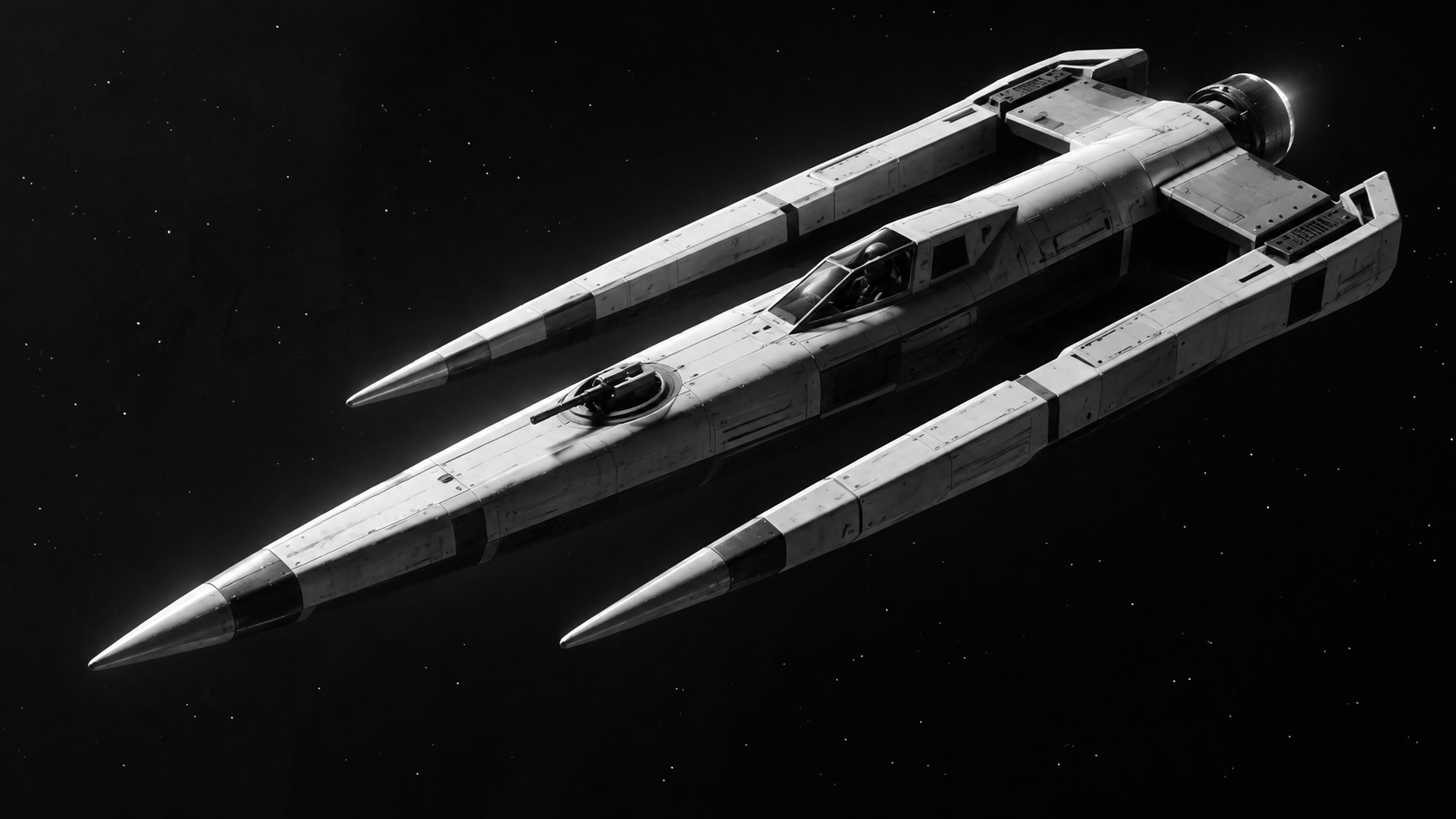
Rank 1 Sokil, front three-quarter view.
“Sokil” — a single-seat space interceptor of the Hetmanate, designed for achieving space superiority, escorting strike squadrons, and defending large ships from fighters, torpedoes, and small attack craft. It is the most mass-produced combat vessel of the fleet and is considered the standard machine for most military pilots.
The designers sacrificed armor thickness for maximum speed and acceleration. The lightweight hull of multi-layered composites can withstand only debris, micrometeorites, and light-weapons fire. The primary protection of the “Sokil” is not its armor, but its maneuverability, powerful main engines, and a system of attitude thrusters that allow instantaneous changes in direction without loss of speed.
The main armament of the interceptor consists of two “Shylo-M” laser mounts, positioned on either side of the nose section. A synchronized targeting system converges their beams onto a single point, significantly increasing lethality. Against fighters, a short burst is sufficient, while for engaging larger ships the pilot concentrates fire on sensors, engines, radiators, or other critical nodes.
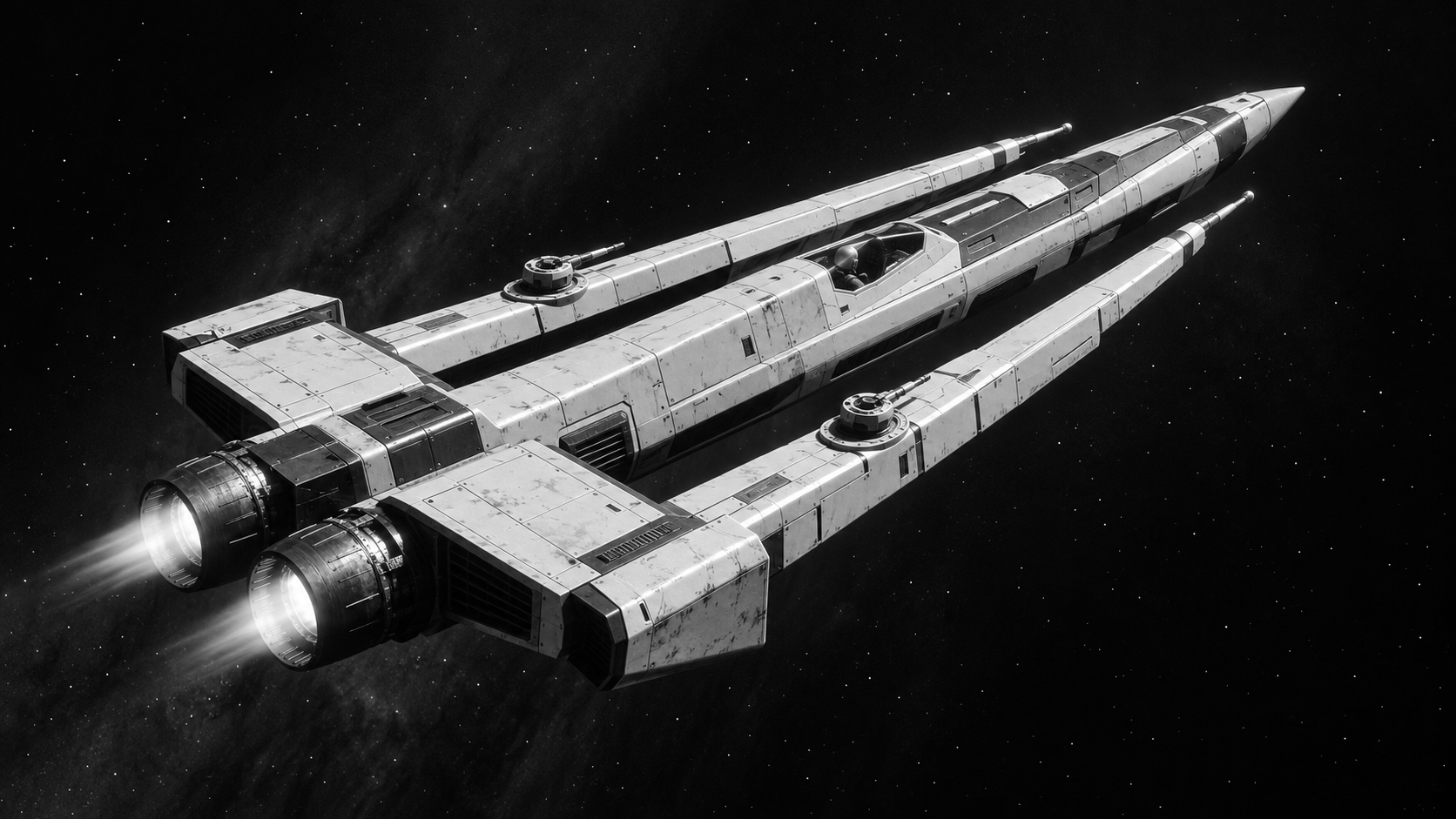
Rank 2 Sokil, rear view showing its twin main engines.
The secondary armament consists of micro-torpedo cassettes or short-range guided missiles. They are used to finish attacks on damaged targets or to intercept particularly maneuverable opponents that are difficult to keep in the laser crosshairs for long.
The fire-control system is largely automated. The onboard computer predicts the target’s trajectory, compensates for relative velocities, and controls the micro-corrections of the “Shylo-M” emitters. The pilot’s task is not so much precise aiming as choosing the optimal attack position.
The “Sokil” possesses an exceptional thrust-to-mass ratio, allowing it to accelerate faster than most ships of its class. At the same time, the fuel and reaction-mass reserves for the maneuvering thrusters limit the duration of autonomous operations. For this reason, interceptors usually operate from carriers, dreadnoughts, or orbital bases, where they can quickly replenish energy cells and reaction-mass reserves.
In Hetmanate tactics, “Sokils” rarely fight alone. They operate in flights of four or eight machines, attacking a target simultaneously from different directions. While some crews lure the enemy into a maneuver, others concentrate “Shylo-M” fire on the most vulnerable elements of the ship. Such tactics allow even light interceptors to gradually disable significantly larger vessels.
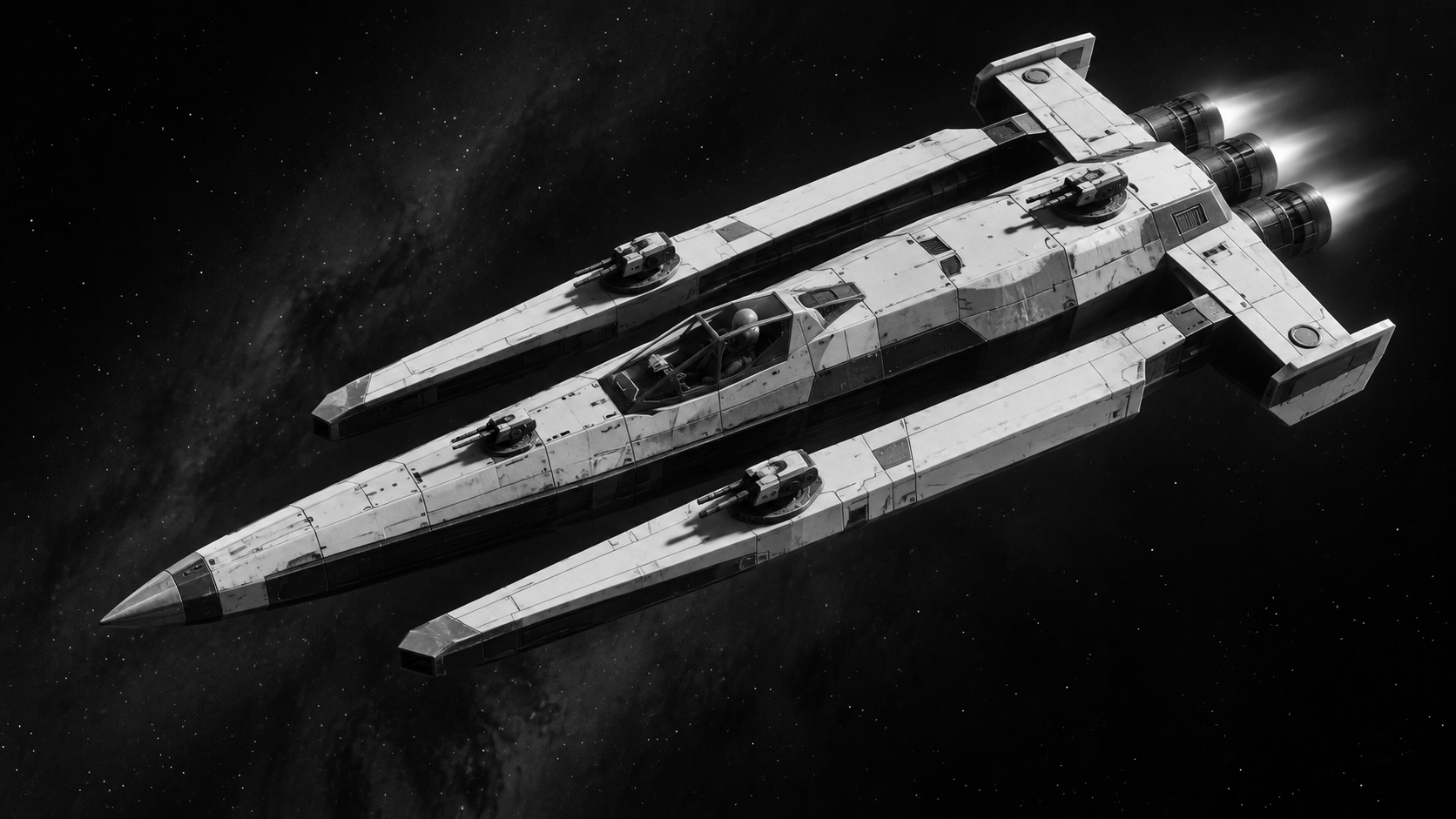
Rank 3 Sokil, dorsal view showing four gun mounts.
Among fleet pilots, there is a rule:
“If you are seen — you are already too late. The ‘Sokil’ wins before the enemy has time to aim its guns.”
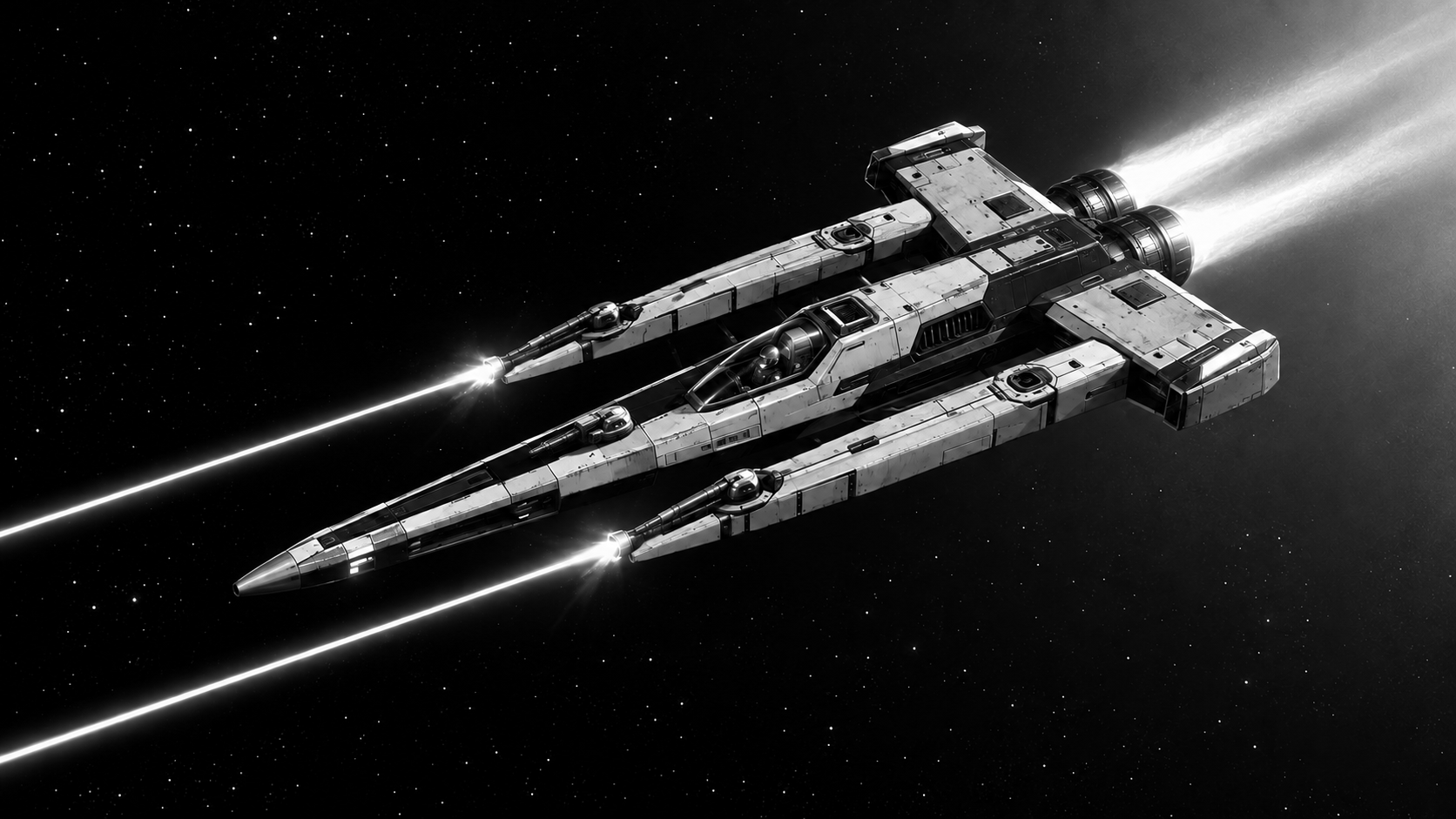
Rank 2 Sokil firing its lasers.